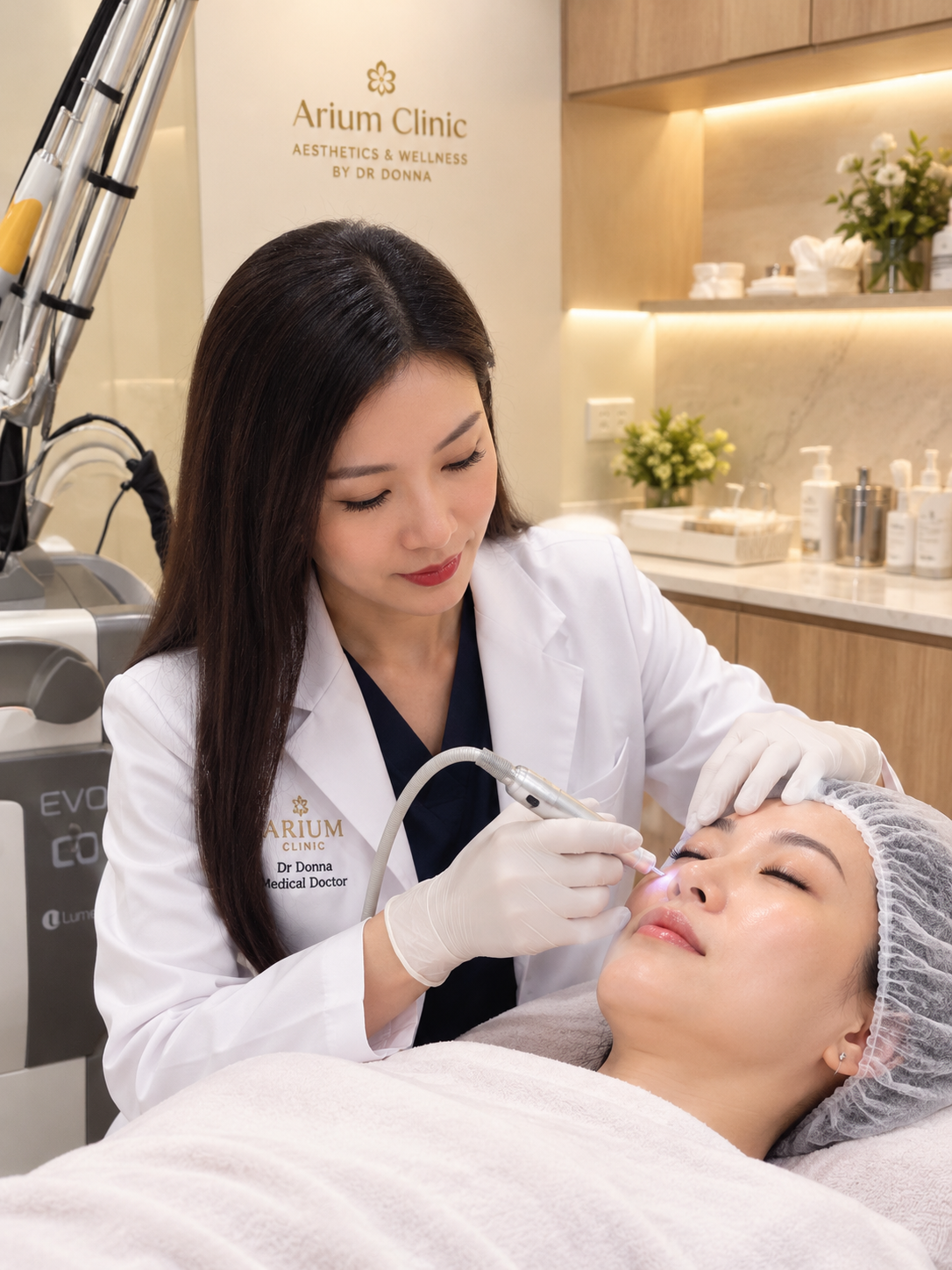
If you are looking for melasma treatment in Singapore, it is important to understand that treating melasma requires more than simply removing visible pigmentation. The condition involves increased melanin production and can be influenced by several factors, including sun exposure, hormonal changes, genetics and skin inflammation.
Melasma is a common skin pigmentation condition that causes brown, greyish-brown or darker patches to develop on the face. These patches often appear on the cheeks, forehead, upper lip and chin. Although melasma is generally harmless, it can be persistent and may affect the overall appearance of the skin.
At Arium Clinic, we offer a range of aesthetic treatment options to address pigmentation and improve overall skin appearance. Depending on the type and depth of pigmentation, suitable options may include pigment laser treatments, glycolic acid peels, Intense Pulsed Light (IPL) and DermaWhite skin boosters. A doctor may also recommend an appropriate topical skincare programme as part of a longer-term management plan.
What Causes Melasma?
Melasma develops when melanocytes, the cells responsible for producing melanin, become overactive and produce excess pigment in certain areas of the skin.
Several factors can contribute to melasma:
1. Sun exposure
Ultraviolet (UV) radiation is one of the major triggers of melasma. Regular exposure to sunlight can stimulate melanin production, making existing pigmentation darker and increasing the likelihood of recurrence.
2. Hormonal changes
Hormonal fluctuations can influence melasma development. This explains why pigmentation sometimes appears or becomes more noticeable during pregnancy or while using hormonal medication.
3. Genetics
Some individuals have a greater tendency to develop melasma because of their genetic background and skin characteristics.
4. Skin inflammation
Skin irritation and inflammation may stimulate pigment production. Aggressive skincare, unsuitable treatments and excessive exfoliation can sometimes make pigmentation worse.
Understanding these contributing factors helps determine which melasma treatment options may be appropriate.
What Are the Options for Melasma Treatment in Singapore?
Melasma can be challenging to manage because pigmentation may occur at different depths within the skin. Therefore, not every pigmentation treatment is suitable for every patient.
A personalized treatment approach may combine different modalities to address visible pigmentation while supporting overall skin health.
1. Pigment Laser Treatment
Pigment laser treatment uses targeted light energy to interact with excess melanin in the skin. Depending on the laser technology and treatment settings, it may help improve the appearance of selected pigmentation concerns.
For suitable patients, pigment laser treatments may form part of a melasma management program.
However, melasma requires careful treatment selection. Excessive energy or inappropriate treatment settings may trigger inflammation and post-inflammatory hyperpigmentation, potentially making pigmentation more noticeable.
A doctor should assess the type of pigmentation, skin characteristics and treatment history before recommending laser treatment. Laser procedures are generally considered an adjunct rather than a standalone solution for melasma.
2. Chemical Peels
Glycolic acid is an alpha-hydroxy acid (AHA) commonly used in professional chemical peels. It works by exfoliating the outermost layers of the skin and encouraging the removal of superficial dead skin cells.
For patients with suitable pigmentation concerns, glycolic acid peels may help:
Improve the appearance of uneven skin tone.
Reduce superficial pigmentation.
Improve skin texture and dullness.
Support skin renewal.
Chemical peels may complement other pigmentation treatments, particularly when superficial pigmentation is present.
Nevertheless, melasma-prone skin can be sensitive. Excessive exfoliation or overly aggressive peels may cause irritation and worsen pigmentation. The concentration and treatment frequency should therefore be determined according to the patient’s skin condition.
3. IPL Treatment for Pigmentation
Intense Pulsed Light (IPL) is a light-based treatment that delivers controlled pulses of broad-spectrum light into the skin.
IPL can target certain types of superficial pigmentation and sun-related discoloration. It may help improve uneven skin tone and the appearance of selected brown spots.
However, IPL is not suitable for every type of melasma.
Patients with deeper pigmentation or darker skin types may have a greater risk of unwanted pigmentation changes following light-based treatments. In some cases, IPL can aggravate melasma rather than improve it.
A proper assessment is important to distinguish melasma from other pigmentation conditions, such as solar lentigines and post-inflammatory hyperpigmentation, before considering IPL.
Hyaluronic Acid (HA): Helps attract and retain moisture, supporting skin hydration and a smoother skin appearance.
Glutathione: An antioxidant that has been investigated for its potential role in regulating melanin production.
Vitamin C: An antioxidant involved in collagen synthesis and commonly used in skincare formulations to support a brighter-looking complexion.
By combining these ingredients, Dermawhite skin booster is positioned as an adjunctive skin treatment for patients looking to improve skin hydration and overall radiance.
Glutathione and vitamin C are associated with antioxidant activity, while hyaluronic acid helps support skin hydration.
Can Topical Skincare Help Treat Melasma?
Yes. Topical skincare plays an important role in managing melasma, particularly when used alongside appropriate professional treatments.
Unlike procedures that target visible pigmentation, topical skincare can form part of a longer-term approach to controlling excess pigment production.
Depending on the patient’s condition, a doctor may recommend prescription topical treatments containing ingredients such as hydroquinone.
Hydroquinone is a recognized skin-depigmenting ingredient used in the medical management of melasma. It works by inhibiting tyrosinase, an enzyme involved in melanin production.
However, hydroquinone is not suitable for unsupervised or prolonged use. It may cause irritation and other unwanted skin changes. A doctor should determine whether it is appropriate and supervise its use.
Other skincare ingredients, such as tranexamic acid, arbutin, niacinamide and selected retinoids, may also be considered depending on individual skin characteristics and tolerance.
Why Sunscreen Is Important for Melasma Management
Sun protection is one of the most important parts of any melasma management program.
Even after pigmentation improves, exposure to UV radiation and visible light can stimulate melanin production and contribute to recurrence.
For this reason, patients should pay attention to daily sun protection.
Consider the following habits:
Apply broad-spectrum sunscreen with SPF 30 or higher every morning.
Reapply sunscreen when spending extended periods outdoors.
Wear a wide-brimmed hat when exposed to direct sunlight.
Avoid excessive sun exposure, particularly during peak sunlight hours.
Consider tinted sunscreen containing iron oxides for additional protection against visible light.
Consistent sun protection helps support treatment outcomes and reduce the likelihood of pigmentation becoming darker again.
How Do You Choose the Right Melasma Treatment?
There is no single treatment that works for everyone with melasma. The most suitable approach depends on several factors:
Depth of pigmentation: Superficial pigmentation may respond differently from deeper dermal pigmentation.
Skin type: Individuals with darker skin tones may have a higher risk of post-inflammatory hyperpigmentation following certain laser and light-based procedures.
Severity of melasma: More extensive or persistent pigmentation may require a combination of medical skincare and carefully selected procedures.
Previous treatment history: Patients who have experienced irritation or worsening pigmentation following previous treatments may require a more conservative approach.
A doctor can assess these factors and recommend an appropriate treatment plan. In some cases, topical skincare and sun protection may be prioritized before considering procedural treatments.
Melasma Treatment Singapore
At Arium Clinic, we understand that pigmentation concerns can be frustrating, particularly when melasma becomes darker or returns after treatment.
Our approach focuses on understanding the patient’s skin condition and discussing suitable treatment options based on individual needs.
Depending on the assessment, options may include pigment laser treatments, chemical peels, IPL and Dermawhite skin boosters as part of a broader skin management program.
We also emphasize the importance of appropriate topical skincare and consistent sun protection to support longer-term pigmentation management.
Melasma can be a recurring condition, and complete clearance is not always possible. However, with appropriate assessment, realistic treatment expectations and consistent maintenance, patients may achieve an improvement in the appearance of uneven skin tone.
If you are considering melasma treatment in Singapore, a consultation with a doctor can help you understand your pigmentation concerns and explore suitable options.
Call us now to schedule your personalized consultation for melasma treatment in Singapore with Dr Donna.
OUR DOCTOR
Dr Donna Chow, Medical Director, Arium Clinic
Dr Donna has many years of experience in the field of Aesthetics Medicine. She graduates with a medical degree from National University of Singapore and holds two post graduate diplomas in Family Medicine and Dermatology (Distinction).
She is certified by the Singapore Medical Council Aesthetic Procedures Oversight Committee in the administering aesthetics injections, chemical peels, lasers for pigmentation, skin resurfacing and hair removal, non surgical skin tightening treatments and non invasive body contouring treatment. Click here to read more about her.
FILL UP THE ENQUIRY FORM BELOW AND WE WILL GET BACK TO YOU WITHIN 24 HOURS.
Share this with friends:
You might also like:
Pigment Laser Treatment How pigment laser treatment works? Our skin contains pigment known as melanin. Melanin is responsible for our skin,…
Becoming Mommy Becoming mommy is a tough journey. Undeniably, motherhood is the most beautiful part of a woman's journey. From…